VNC began at the Olivetti Research Laboratory in Cambridge in the mid-1990s and was released as open source in 1998. When AT&T closed the Cambridge lab in 2002, members of the original VNC team founded RealVNC Limited to continue the technology commercially.
Explore RealVNC Connect for business remote access. Start a free trial.
A lab in Cambridge
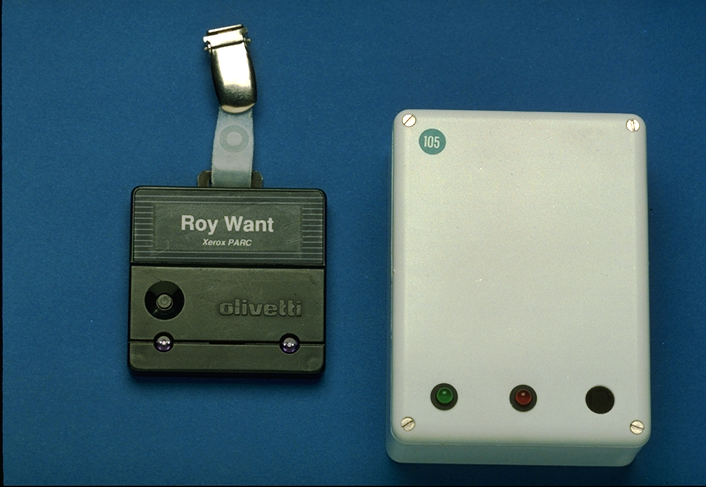
VNC was created at the Olivetti Research Laboratory (ORL) in Cambridge, England, in the mid-1990s.
The team’s answer was to work at the lowest common denominator every device shares: the framebuffer. If you ship pixels and accept keyboard and mouse events, the remote end needs almost no intelligence, and any platform can play either role. That idea became the Remote Framebuffer protocol, RFB, and the software that spoke it became Virtual Network Computing: VNC.

The 1998 open-source release
In 1998 the lab released VNC as open source under the GPL.
Debian’s package history records vnc version 3.3.3r2-19 on April 8, 2002. See the Debian vnc package tracker.
The timeline
| 1994-1997 | VNC developed at ORL in Cambridge; the RFB protocol takes shape. |
|---|---|
| 1998 | VNC released as open source under the GPL; adoption spreads far beyond the lab. |
| 1999 | AT&T acquires ORL; the lab becomes AT&T Laboratories Cambridge and VNC development continues. |
| 2001 | TightVNC forks, focused on better compression for slow links; its Tight encoding later spreads ecosystem-wide. |
| 2002 | AT&T closes the Cambridge lab. Members of the original team found RealVNC Limited to continue the technology commercially. UltraVNC emerges the same era, extending VNC for Windows helpdesk work. |
| 2004 | TurboVNC begins as a performance-focused companion to VirtualGL, using the TightVNC lineage for responsive 3D and video workloads; TurboVNC source history. |
| 2009 | TigerVNC forks from TightVNC to modernize the cross-platform core. |
| 2011 | The RFB protocol is published as RFC 6143, formalizing what the ecosystem had long practiced. |
| 2020s | Wayland reshapes Linux screen capture; wayvnc and portal-based servers carry VNC into the new stack. |
The 2009 open letter founding TigerVNC framed the fork as stewardship: concentrate scattered VNC development, share code and ideas, and keep the cross-platform core moving.
The people
Tristan Richardson, Quentin Stafford-Fraser, Kenneth Wood, and Andy Hopper authored the 1998 IEEE Internet Computing paper, Virtual Network Computing (PDF).
RFB’s encoding trade-off
RFC 6143, published in March 2011, describes how RFB encodings trade network bandwidth against client drawing speed and server processing speed. Its raw encoding sends pixel values without compression. See RFC Editor, The Remote Framebuffer Protocol, sections 3 and 7.6.1. For a protocol comparison, see VNC vs RDP.
Where the story goes from here
Explore the projects on the Open Source VNC page or browse the vendor directory.
Sources accurate as of 30 September 2026.
Open-source VNC suits personal projects and home labs. When your business depends on remote access, RealVNC Connect adds end-to-end encryption, centralised management and commercial support from the team that created VNC.